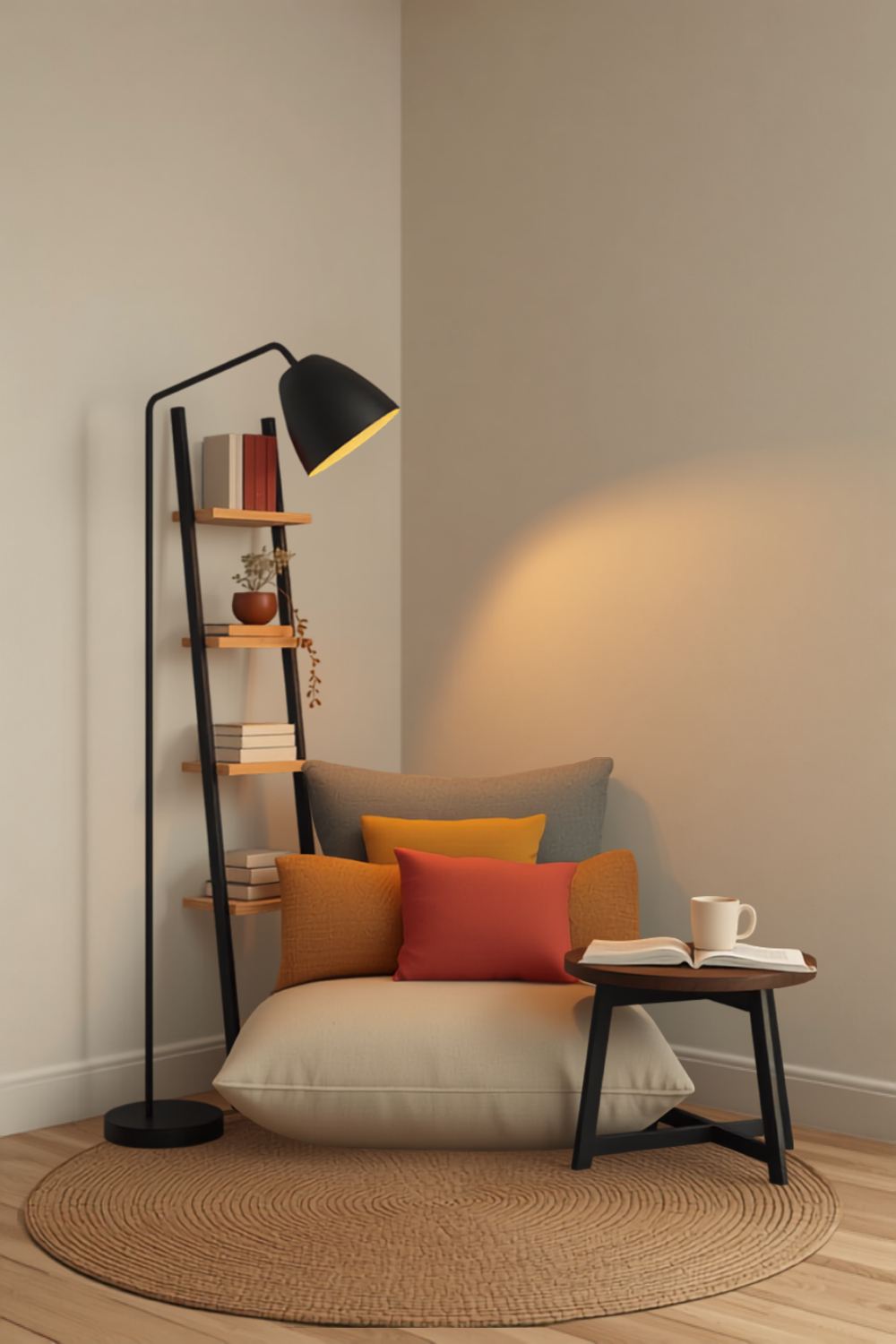
As an Amazon Associate I earn from qualifying purchases. Check current prices, availability and the exact product option before buying. Styling images are illustrative.
i had a corner in my last place that existed purely to hold things i hadn't dealt with. a laundry basket, a tote bag, one of those charging cables that belongs to nothing. it was maybe four feet by four feet and it had been dead space since i moved in. meanwhile i had a whole board of reading nooks saved and zero places in my apartment where i actually wanted to sit down with a book. that gap is very funny in hindsight.
here's the part nobody puts in the pretty pictures: most reading nooks get built and then abandoned inside of a month, and it's almost never about how it looks. it's that you sit down, you get twenty minutes in, your lower back starts complaining, and you migrate to the couch. so the first thing i bought was not a blanket and not a basket — it was a backrest pillow with arms, because a wall is a terrible thing to lean on for an hour. here's what it actually does:
affiliate link
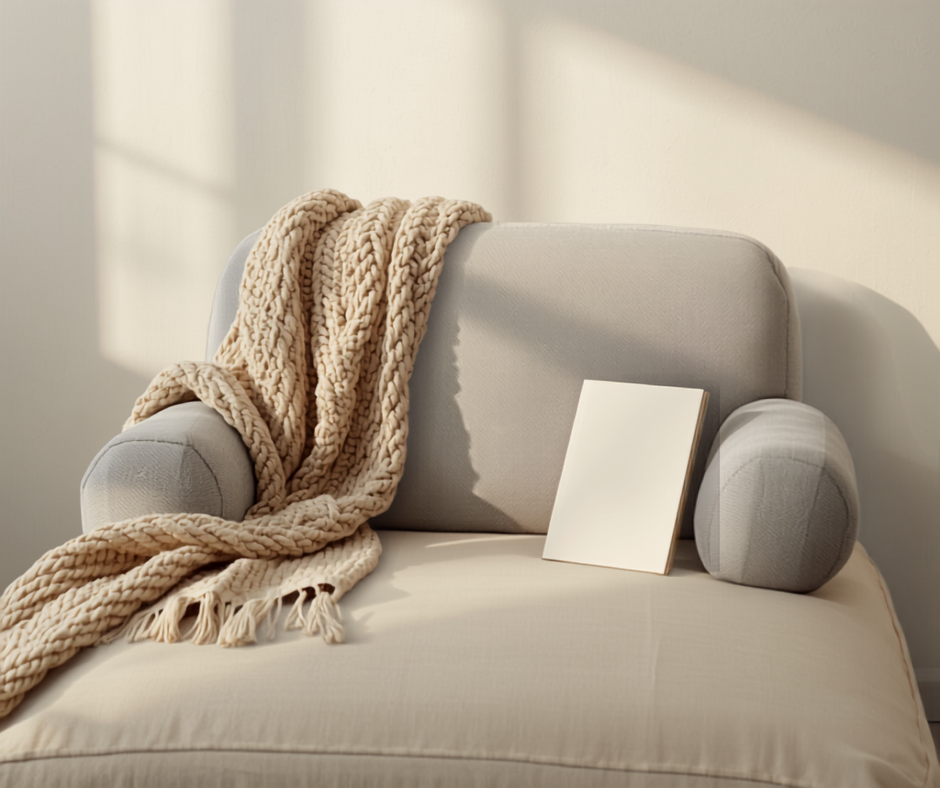
- shredded memory foam fill instead of a solid block, so you can punch and redistribute it until the lumbar curve matches your actual back rather than a mannequin's
- padded arms on both sides — this is the whole difference between reading for twenty minutes and reading for an hour, because your elbows land somewhere instead of hovering
- 18 inches tall, which supports up to about the shoulder blades; that's the height that works sitting on the floor against a wall, where a shorter one leaves your upper back unsupported
- removable cover that unzips and goes in the wash, which matters more than it sounds for something that lives on the floor
- comes in around twenty colorways, so you can match the room instead of settling for the grey in the main photo
first, pick the corner — window or wall
before anything gets bought, go stand in the two candidate corners for a minute each. there are only ever two kinds, and they fail in opposite ways.
the window corner is the one everyone photographs and it is genuinely great for about six hours a day. daylight from the side is the best reading light there is and it's free. the catch is that it stops being a reading corner the moment the sun sets, which for most of us is exactly when we read. it's also the coldest wall in the apartment in january and the hottest in august, and if the window faces the sun directly you get glare on a glossy page and on a screen. a window corner needs its own lamp anyway, so it does not save you a purchase.
the wall corner — a real inside corner with two walls meeting — is the one i'd actually pick, because two walls means you're enclosed on two sides, and enclosure is most of what "cozy" is. it also gives you a solid back to lean against. the tradeoff is that it's dark, so the light is not optional.
then the boring part that decides it: outlets. walk over and physically look. a reading corner needs one working outlet within about six feet, and a lot of apartment corners have exactly zero — outlets cluster where furniture historically went, and a genuinely dead corner is often dead because there was nothing to plug in there. if your best corner has no plug, you have three honest options: run a flat low-profile cord along the baseboard, put a rechargeable light there instead, or pick the second-best corner. what you should not do is plan around an extension cord snaking across a walkway, because you will trip on it, resent it, and stop using the corner. that is a real way nooks die.
one more test that costs nothing: stand in the corner and look at where you already spend time. a nook eleven feet from your couch gets used. a nook in the spare room at the end of the hall does not, no matter how good it looks. proximity beats aesthetics every single time.
piece 02 — the light
one lamp that also holds the books
a dark corner needs its own light source, and in a rental that means a floor lamp, because anything mounted means holes. the move that made this corner work for me was picking a lamp with shelves built into the post — it's one footprint, one plug, and the book pile, the mug coaster and the little dish for my glasses all live on it instead of on the floor. in a four-by-four corner, combining two objects into one is the entire game.
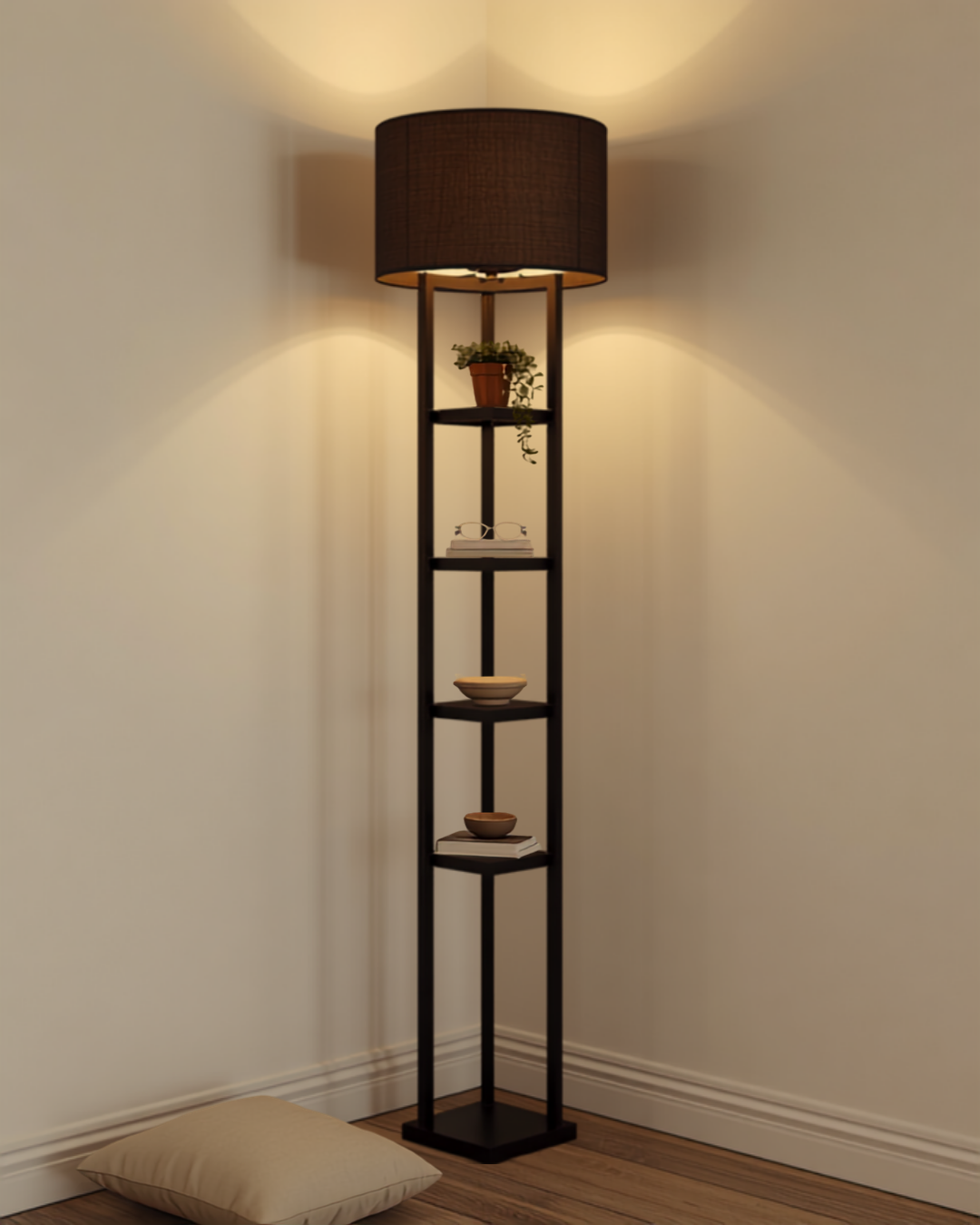
- four square display tiers built into the post, so the lamp is also the bookshelf — one object where a nook would normally need two, which is the whole point in a small corner
- 63 inches tall, so the shade sits above your head when you're on the floor and the light comes down over your shoulder onto the page instead of straight into your eyes
- the included bulb switches between three color temperatures on the pull chain — leave it on 3000k warm and never touch the other two
- freestanding; assemble and secure it exactly as the manufacturer directs, which is the whole reason it's in this post
- one plug for both the light and the storage, so a corner with a single outlet is still enough
two honest notes on this one. it does need assembling — it's a pole that screws together with shelves that slot in, so budget half an hour and a flat surface. and the pull chain cycles color temperature, not brightness; it is not a dimmer. if you want the light to actually fade down at night you'd add a second small warm source rather than expecting this one to do it, which is a whole thing i went into with the four warm layers that got me off the big light — that post is the full recipe, and the short version is that one lamp is never the answer for a whole room. for a single reading corner, though, one good tall lamp genuinely is enough.
what color temperature to actually read under at night
this is the part that trips people up, so: the number on the bulb box is kelvin, and lower means warmer. 2700k is the candlelight-adjacent end, 3000k is soft warm white, 4000k reads neutral-to-clinical, and anything at 5000k and up is the daylight setting that makes a bedroom look like a break room. for evening reading you want 2700k to 3000k and nothing above it. if you buy one lamp for this corner and it ships with a switchable bulb, the setting you want is the warmest one it has, permanently.
now the honest bit about blue light, because it gets oversold. warm light is not a sedative. swapping a bulb will not knock you out at ten. what the research actually supports is narrower and more boring: bright light late in the evening — especially bright light with a lot of blue in it, aimed straight at your eyes — pushes your body clock later, and dim warm light does that far less. the two levers that matter most are brightness and how close the source is to your face, and by both of those measures a phone six inches from your eyes is doing more damage than a ceiling fixture eight feet up. so the useful version of this advice isn't "buy a warm bulb and sleep better." it's: read a paper book instead of a lit screen if you can, keep the light low and warm and beside you rather than in front of you, and don't expect a lamp to fix a 1am scroll habit. i still scroll. i'm just honest that the lamp isn't what's keeping me up.
practical placement, since it's free: the light wants to come from behind and slightly to the side of your shoulder, angled down onto the page. light in front of you means glare bouncing off the paper and a lamp in your peripheral vision the whole time. this is why the tall lamp beats a little table lamp on the floor — height gets the source above your eyeline. if you want the extra layer, a set of warm string lights taped along the top of the two walls with removable hooks is about the cheapest glow you can add to a corner, and it's the one thing that makes the nook read as a nook in photos. it is decorative, not functional. you still need the real lamp.
piece 03 — the surface
somewhere to put the mug down
the third failure mode, after back support and light, is having nowhere to set anything. you sit down with tea and a book, and the tea goes on the floor next to you, and then you knock it over with your foot, and then you stop bringing tea, and then the corner is a little less appealing every week. a normal side table doesn't fit in a nook because its legs land exactly where your cushion is. a c-shaped table solves it by cantilevering — the base slides underneath the cushion or sofa edge and the top hovers over your lap.
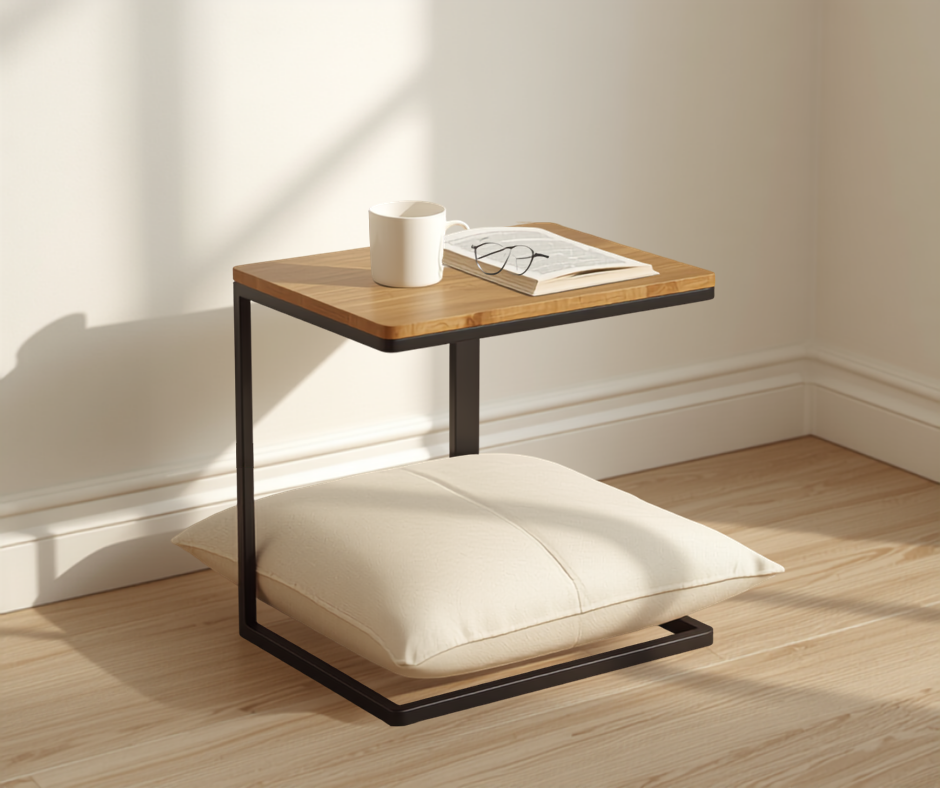
- c-shaped cantilever base slides under a floor cushion, sofa or bed so the top sits over your lap — no legs competing with your seat for floor space
- 15.35 by 11.41 inch top: enough for a mug, a paperback and your phone, small enough that it isn't a piece of furniture you have to design around
- check the selected table height, load limit and clearance against your seat before buying
- steel frame with a wood-look top on a footprint you can pick up with one hand and move somewhere else entirely
- four finishes, and the rustic brown is the one that reads warm next to a black lamp instead of matching it too hard
why people abandon reading nooks
i've now built this twice and watched two friends build one, and the failures are boringly consistent:
- uncomfortable after twenty minutes = wrong back support. this is the number one killer and it is almost always a soft floor cushion with nothing behind it. a wall is flat and your spine is not. if you find yourself sliding down and then getting up, try a different seat or support and stop if it is uncomfortable.
- no light of its own. a corner that only works in daylight is a corner you use four times before winter, and then never again.
- nowhere to put the mug. sounds trivial. it is not trivial. it's the difference between a twenty-minute sit and a two-hour one.
- too far from where you live. the spare-room nook is a beautiful photo and a dead room. put it where you already walk past.
- it became storage again. if the nook has no shelf, the floor becomes the shelf, and within a month there's a laundry pile in it. giving the books an actual home is what stops the corner reverting.
the order to build it in
if you're doing this over a few paychecks rather than all at once, the order matters, because each step should make the corner usable on its own. one: the backrest, plus whatever floor cushion or folded duvet you already own. sit in it for a week before buying anything else — that week tells you whether you picked the right corner, and it is much cheaper to be wrong at this stage. two: the light, once you know the corner is real. three: the table, which is the smallest upgrade and the one you'll feel most disproportionately grateful for. everything after that — a rug to define the edges, a throw, the string lights — is decoration, and none of it fixes a corner that fails on the first three.
check the furniture instructions for any required anti-tip attachment before deciding whether the setup suits your rental. this is the same no-holes logic behind every one of my renter-friendly decor upgrades — a rented apartment is a place where the good move is almost always the freestanding one, and a reading corner is the easiest room-changing thing you can build without ever picking up a drill.
honest pros and cons
the total depends on the current options and prices. start by measuring and using what you already own, then buy only what the corner still needs. the backrest pillow is the best money in the group — pros are the adjustable shredded fill and the arms; the con is that shredded fill compresses over months, so you'll be re-fluffing it, and it is bulky enough that there's nowhere to hide it when you have people over. the shelf lamp is excellent value and the shelves genuinely earn their keep, but it needs assembly, the tiers are small (paperbacks and a plant, not a hardcover row), and the pull chain does not dim — if a dimmer is non-negotiable for you, this is the wrong lamp. the c-table is the cheapest piece and the one i'd defend hardest; the only real con is that a 15-inch top is genuinely small, so if you want to eat dinner in the nook, size up. and the honest overall caveat: floor seating is not for everyone. if your knees don't love getting up off the floor, put this exact setup in a chair corner instead — the backrest works on a chair, the lamp and the table don't care, and the logic is identical.